Pagani: Where Art and Hypercar Engineering Converge
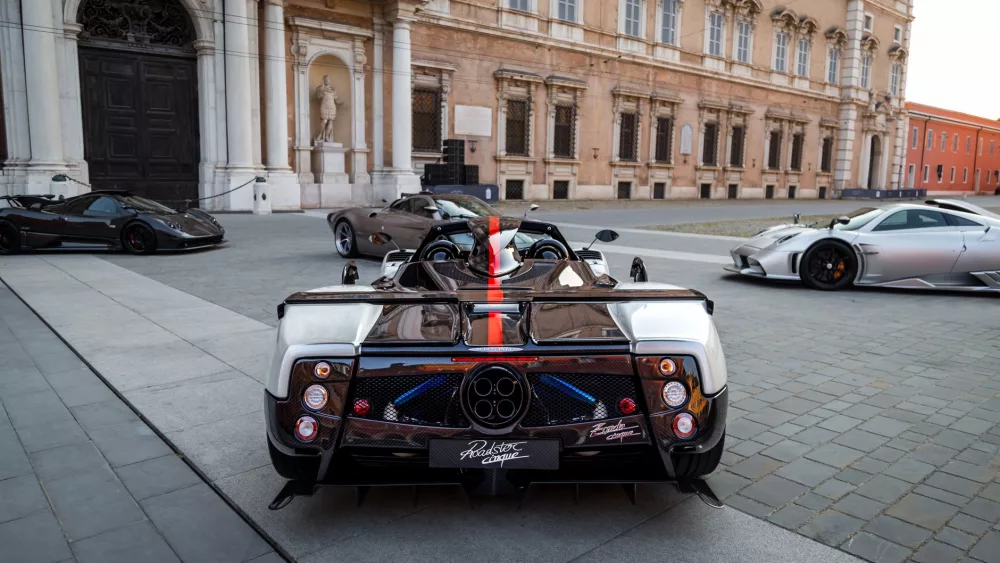
When we talk about the pinnacle of automotive engineering, performance, and sheer artistic expression, my mind immediately jumps to Pagani Automobili. It's not just a car company; it's an ode to craftsmanship, a celebration of obsessive detail, and a defiant stand against the mundane. Founded by Horacio Pagani, an Argentine visionary with an insatiable passion for design and technology, this Italian manufacturer has carved out a unique niche in the hypercar world. We aren't just looking at fast machines here; we're witnessing rolling sculptures, each with a soul and a story.
The Genesis of a Dream: Horacio Pagani's Vision
Horacio Pagani’s journey is truly inspiring, a narrative of unwavering determination. Born in a small town in Argentina, he nurtured a dream of building the world's most beautiful cars from a very young age. He wasn't just a mechanic; he was an artist and an engineer, captivated by the elegance of design and the power of advanced materials. I've always found it fascinating how his early influences, particularly his admiration for Leonardo da Vinci – who blended art and science so seamlessly – shaped his entire philosophy. You see, Horacio believed that a car shouldn't just perform; it should evoke emotion, it should be beautiful from every angle, and it should utilize the very best technology available.
After working at Lamborghini, where he was instrumental in developing carbon fiber components for the Countach Evoluzione, Horacio saw the future clearly. He felt the automotive world wasn't fully embracing composites yet, and he knew he could push those boundaries. So, in 1991, he bravely founded Pagani Composite Research, initially supplying carbon fiber to various automotive clients, including Lamborghini itself. This provided the financial and technological foundation for what was to come: his very own hypercar.
The Birth of a Legend: The Pagani Zonda
I remember the first time I saw images of the Pagani Zonda C12 – it was absolutely breathtaking. Unveiled at the Geneva Motor Show in 1999, it wasn't just another supercar; it was an alien spacecraft, a machine unlike anything else on the road. The Zonda, named after an air current over Argentina, was a declaration. It sported a custom-built 6.0-liter Mercedes-AMG V12 engine, a clear indicator of its serious performance intentions. But it was the design, those flowing lines, the quad exhaust pipes centrally mounted like gun barrels, and that unforgettable glass canopy, that truly made it stand out.
Over the years, the Zonda evolved, each iteration pushing the boundaries even further. We saw the Zonda F, a tribute to Formula 1 legend Juan Manuel Fangio, which brought even more power and aerodynamic refinement. Then came the track-focused Zonda R, a car so extreme it was almost a prototype racer, not street legal, but a pure expression of performance. And who could forget the Zonda Cinque, a limited-edition masterpiece with its exposed carbon fiber weave, proving that carbon could be both structural and stunningly beautiful. Each Zonda wasn't just an update; it was a handcrafted evolution, a series of improvements born from an unyielding quest for perfection. When you look at a Zonda, you can tell it's been touched by hands, not just stamped out by machines.
The Huayra: A New Chapter in Aerodynamics
As much as we loved the Zonda, all good things must evolve. In 2011, Pagani introduced the Huayra, named after 'Wayra Tata,' the 'God of the Winds' in Quechua. This car wasn't just a successor; it was a complete reimagining, incorporating active aerodynamics that were utterly revolutionary at the time. I mean, four independently operating flaps – two at the front, two at the rear – constantly adjusting to optimize downforce and reduce drag? That's engineering poetry right there!
The Huayra carried on the tradition of Mercedes-AMG power, utilizing a twin-turbocharged 6.0-liter V12 specially developed for Pagani. This engine delivered immense power while also meeting stricter emission regulations. The design, while distinctly Pagani, was smoother, more fluid, and less overtly aggressive than the Zonda, yet equally captivating. Internally, the cockpit was a symphony of machined aluminum, carbon fiber, and leather, a true work of art where every switch and dial felt special. The Huayra, like its predecessor, saw several limited and extreme versions, including the ballistic Huayra BC (named after Benny Caiola, Pagani's first customer) and the stunning Huayra Roadster, offering that open-top exhilaration.
The Art of Bespoke Craftsmanship
What truly sets Pagani apart in my opinion, beyond the performance numbers, is its unwavering commitment to craftsmanship. I often think of their factory in San Cesario sul Panaro not as a production plant, but as an atelier, a high-tech workshop where artisans painstakingly assemble each vehicle. It's a blend of old-world skill and cutting-edge technology. Consider their use of carbo-titanium, a material developed in-house that combines the strength of carbon fiber with the elasticity of titanium. It makes the monocoque incredibly rigid yet remarkably light – it’s a brilliant innovation.
Every component, down to the smallest bolt – many of which are titanium and engraved with the Pagani logo – is meticulously designed and executed. We're talking about visible gear linkage in the Zonda, a masterpiece of engineering and aesthetics, or the intricate leather weaving inside a Huayra. The sound system alone in a Pagani can be a work of art, with speakers integrated seamlessly into the design. It's this fanatical attention to detail that elevates a Pagani from a car to an investment, an heirloom, a piece of automotive art. You aren't just buying a car; you're commissioning a bespoke creation.
What Does the Future Hold for Pagani?
As we look to the future, Pagani continues its path of exclusivity and innovation. The Utopia, their latest creation, carries on the legacy of its predecessors, balancing tradition with modernity. It maintains a pure V12, manual transmission option, and focuses on lightweight design and driving purity, something I truly appreciate in an era increasingly dominated by electrification and autonomy. While other hypercar manufacturers are moving towards hybrid powertrains or full EVs, Horacio Pagani has carefully considered these paths, but always with a focus on retaining the visceral, emotional connection his cars provide.
In essence, Pagani isn't just selling cars; it’s selling a dream, a philosophy. It’s a testament to one man’s relentless pursuit of perfection and a beautiful fusion of art and science. For those of us who appreciate the absolute zenith of automotive design and engineering, Pagani remains an unparalleled icon, reminding us that true passion can indeed create masterpieces that transcend mere transportation.
About Editorial Team
Senior columnist and culture critic specializing in architectural designs, emerging high-growth systems, and contemporary philosophies.
Contact Desk
Have an editorial inquiry or custom partnership idea? Reach our team directly.